Southern Adirondack Audubon Society
This May 11th, SAAS is installing the first of two Motus stations in the Washington County Grasslands IBA as part of our ‘Champlain-Hudson Migratory Gateway’ to capture migrating and resident birds that fly between and around the antennas. The second tower will be erected on top of the science building at Skidmore College in collaboration with the Skidmore Bird Alliance Campus Chapter in June.
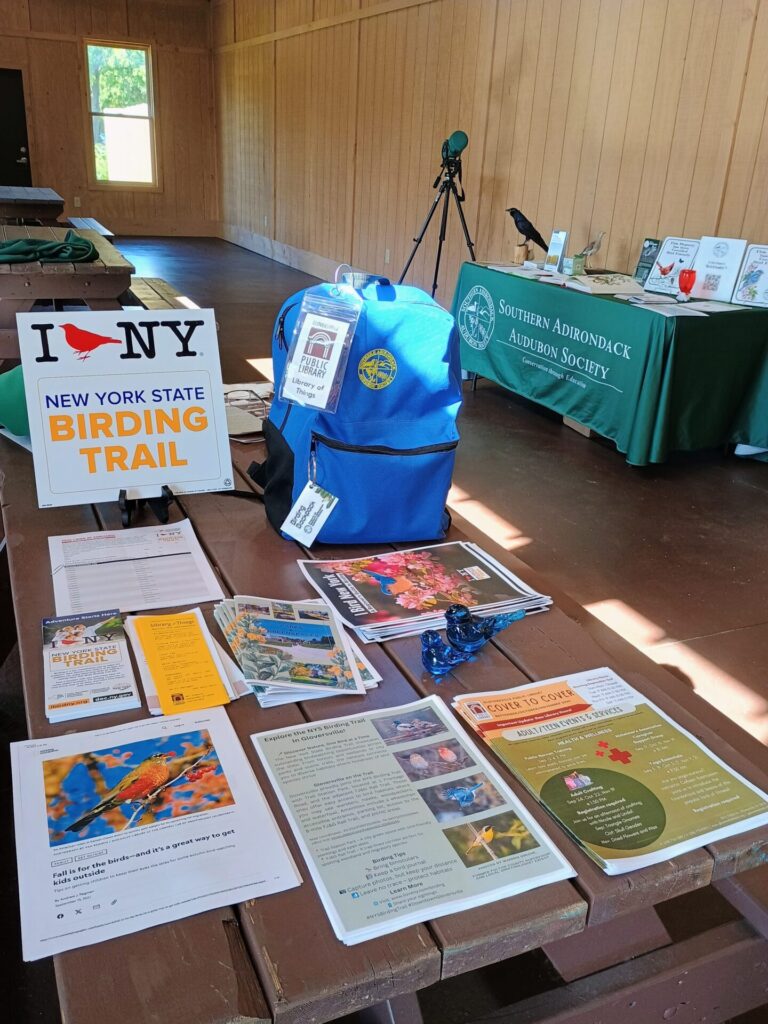
This summer we are a primary collaborator with the The Hyde Collection art museum in Glens Falls, on their “Wings and Wildlife” exhibit among other pieces 20 pieces from the American Museum of Bird Art out of Massachusetts. We are bringing a bird art journaling workshop, a bird sit and bird walk, two presentations and live birds of prey rehabber to their campus during the June 6th through October 11th exhibition. We continue to donate our Birding Additionally, we continue to donate Birding Backpacks to libraries in the Southern Adirondack Region and expanding into the Mohawk Valley library system.
South Shore Audubon Society
Note: This info was first used in the chapter’s annual report submission to NAS in March 2026. This provides an opportunity to repurpose and use the info for a second time. Enjoy!
South Shore Audubon of Freeport, NY is a nonprofit, all-volunteer chapter of the National Audubon Society. SSAS territory covers approximately the southern half of Nassau County on Long Island.
SSAS programs and partnerships below include working together on coalitions and in groups to advocate for conservation with a diversity of local, state, regional and national environmental organizations, big and small.
The “Community Building” milestone in National Audubon’s Flight Plan relies on chapters bringing in more people for conservation action than ever before, and SSAS can help NAS to scale up conservation action with our public engagement programs and conservation partnerships that can help advocating for birds and the habitats they need, and helping NAS to bend the bird curve.
Our work includes the following (the full details on each of these can be found online at the Chapter Reports Page.
- Saving Long Island’s critical wild spaces
- Due diligence, advocating and outreach for environmental issues
- Organizational Sign-On Letters
- Continuing to align with NAS Flight Plan
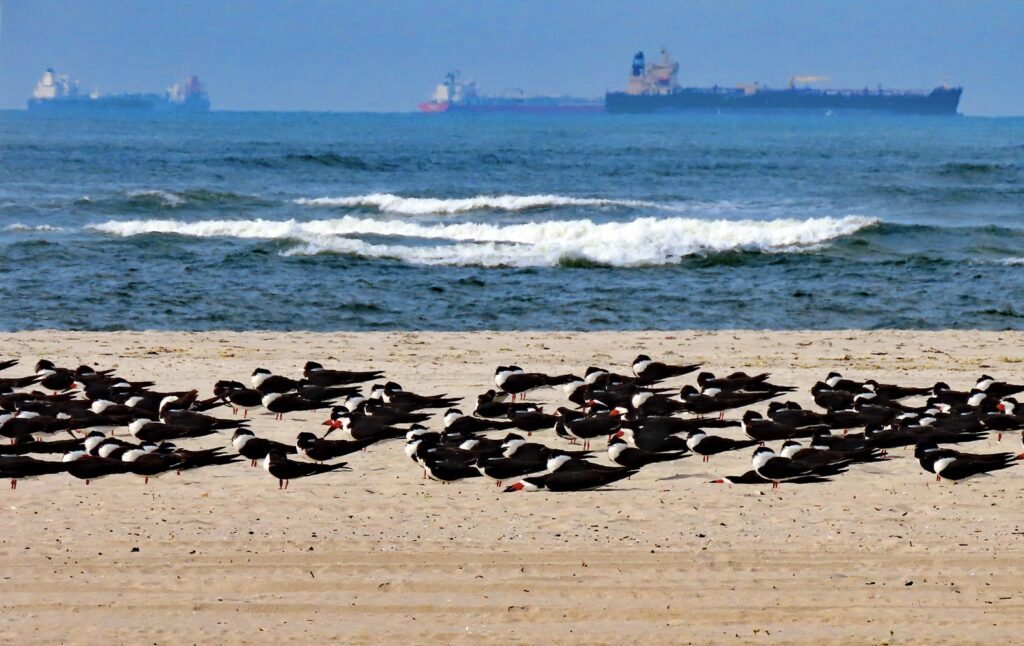
- Black Skimmer GPS Tracking Project.
- Seatuck Beach Nesting Bird Working Group
- Advocating for Renewable Energy. Ending Reliance on Fossil Fuels
- Responsible Siting of Renewable Energy Installations
- SSAS Weekly Bird Walk Series
- SSAS Monthly Nature Topic presentation series
- SSAS Quarterly Newsletter – The Skimmer
- Annual Winter Duck Survey
- Annual Central Park Walk with Chris Cooper
- Town of Hempstead Shorebird Nesting Monitoring
- Annual Bird Species, Migrations, Movements on LI
- College Scholarships
- High School Scholarships
- TR Sanctuary Summer Internships
- Community & Coalition Building
- Michael Sperling Bird Sanctuary Restoration
- Tackapausha Museum and Preserve Restoration
- Hempstead Plains Preserve Restoration
- Oceanside Marine Nature Study Area Restoration
PAST YEAR (2025-26) PRIORITIES
Past Year Priority #1
Saving Long Island’s critical wild spaces by balancing nature preservation and development projects to help birds and to preserve the habitats they need. Long Island’s remaining wild bird habitats are under relentless development pressure, but steadfast advocacy holds promise for habitat protection and wildlife recovery – if federal, state and local decisions in 2026 align with conservation science. Seven at-risk areas across LI illustrate both the fragility and the promise of local preservation stewardship. See: Long Island’s Disappearing Wild Bird Habitats.
- Jamaica Bay Wildlife Refuge – 18,000 acres
- Woodmere Club Golf Course – 100-acre coastal saltmarsh restoration
- Hempstead Plains and East Meadowbrook Riparian Corridor – 100 acres
- Stillwell Woods Preserve – 270 acres in Syosset
- EPCAL Grassland in Riverhead – 1,000+ acres
- Plum Island – 850 acres off Orient Point. Near Great Gull Island.
- Nissequogue River in Smithtown – 120-acre stream confluence area
SSAS Pres. Russ Comeau gave a slideshow presentation at the April 2025 Audubon NY/CT Council meeting, and in May 2025 at the Long Island Audubon Council meeting, on how and why these critical habitats are important to National Audubon’s Flight Plan.
Lookback/Learning: Gained insight on identifying persistent sites that birds need most on LI, and how to work with developers, town, county and state governments, agencies, and the NYS DEC SEQRA process to perpetually preserve these sites so wild birds shall always have them.
Past Year Priority #2
Due diligence, advocating and outreach for environmental issues to support passage of local, state and federal legislation on key issues.
Letters of support were sent to NYS Legislators and Governor Hochul to pass and sign these bills into law.
- Monarch Butterfly Preservation Bill – Became law
- Banning the take of horseshoe crabs – Became law
- NY Native Plants Designation – Became law
- Feathered Lives Also Count (Flaco) Act to reduce bird/building collisions.
- Dark Skies Protection Bill for lights out during spring and fall migration
- Jamaica Bay Ecological Study Bill
- Low impact native landscaping rights in HOAs
- Skip the Stuff – Reduce food service plastic item waste on delivery, takeout, drive-thru.
SSAS shared copies of its bill research and letters of support with AUDUBONCHAPTERSNY list subscribers and reached out to contact non-Audubon bird clubs, natural history societies, the native plant community, other LI environmental organizations, and the public to urge them to consider sending their own letters of support on these important issues.
SSAS Pres. Russ Comeau took part in horseshoe crab press conference organized by Citizens Campaign for the Environment; with coverage by two news crews and representatives of many LI environmental groups in the Horseshoe Crab Coalition in attendance.
Lookback/Learning: Major insights on local, state and federal legislation and learning how to interact with state and local legislatures, councils, and environmental coalitions.
Past Year Priority #3
Organizational Sign-On Letters: To make the world a cleaner and safer place for people and wildlife, the SSAS Conservation Committee keeps up on local, state, and national government policies and actions affecting the environment and the conservation of our natural resources. SSAS Committee co-chairs attend rallies, demonstrations, public hearings and townhall meetings to let lawmakers and community members know the Audubon view, and provide the public with accurate, up-to-date information on environmental concerns. They also recommend the president “sign SSAS on” to important letters to decision-makers, co-signed in conjunction with numerous other organizations working to make our environment and the world a greener, cleaner place.
|
250125 Pkg Redux & Recycle |
250814 Williams NESE pipeline |
CURRENT YEAR (2026-27) PRIORITIES
Current Year Priority #1
Continuing to align with NAS Flight Plan to help save birds and the habitats they need on Long Island (Nassau, Suffolk), nearby NYC boroughs, and downstate New York counties.
Current Year Priority #2
Black Skimmer GPS Tracking Project. SSAS Director Brien Weiner has previously worked with avian research scientist Kate Goodenough and the Town of Hempstead Department of Conservation and Waterways on beach-nesting shorebird tracking and habitat management. In 2025, Brien applied for and SSAS was recently awarded a $4,500 National Audubon grant for a project to be led by Goodenough to start in spring 2026 that will focus primarily on beach nesting birds; in particular, the grant is to cover the expense of GPS tracker “backpacks” to go on the Black Skimmer species to provide tracking data on their movements, habits and habitats every 15 minutes per day for a year as they migrate in spring and fall, winter south of NY, and nest on Long Island beaches and forage for fish to feed their chicks. The project is looking to do research for a 3-year span.
Seatuck Beach Nesting Bird Working Group. Running parallel but unrelated to the above. In 2025, Seatuck Environmental received an unrelated government grant, and has organized a beach nesting shorebird working group of 91 environmentalists from diverse LI organizations, plus a few from New England, the mid-Atlantic, or Great Lakes.
Current Year Priority #3
Advocating for Renewable Energy. Ending Reliance on Fossil Fuels. SSAS works widely and warmly with other environmental organizations on social, global, national, regional, state and local advocacy that meets with SSAS chapter policies. In particular, SSAS is strong on renewable energy outreach and education to transition off fossil fuels to combat climate change. SSAS has a policy to support well-sited wind and solar energy. Also, battery storage to provide stored wind energy (when the wind stops blowing) and solar energy (when the sun is not out). SSAS also advocates for the Propel Project, which is to modernize the electrical grid for southern NY/LI because as the state moves to more solar and wind energy, a stronger grid will be needed. There is unfortunately a lot of local opposition to the above projects.
SSAS Conservation co-chairs take the lead for SSAS on such important advocacies. They may attend rallies in front of legislative buildings with various like-minded organizations on Long Island, in NYC, or Albany, meet with lawmakers, write letters on SSAS renewable energy positions to federal, state and local officials or agencies, write op-eds or are quoted in news article in newspapers, etc.
The same SSAS activities can be said for legislation such as the New York Heat Act, the Bigger Better Bottle Bill, the Packaging Reduction Act and legislation to reduce plastic pollution in landfills and in waterways and the ocean, and more.
Governor Hochul is now promoting the development and use of new nuclear power plants in NY, but this is not part of Audubon’s Flight Plan, so the issue is something that SSAS urges other chapters to consider taking more of a role on opposing new nuclear power plants in NY.
Likewise, SSAS advocates against construction of additional new gas pipelines which will only perpetuate fossil fuel use which is a cause of adverse climate change.
Responsible Siting of Renewable Energy Installations. Some ORES permitted sites for large-scale industrial energy installations in upstate NY do not seem to be “well-sited” due to adverse environmental and farmland impacts. Ft. Edward Solar in Washington County is one that should be revisited in this light. Nevertheless, most of the world seems to understand that there is no path forward without responsibly sited renewable energy like solar power which is the fastest growing energy source, and the leading renewable energy source, doubling within the last three years to become the largest source of “new” power capacity globally, accounting for half of all new electricity installations in 2024 – and solar is projected to overtake nuclear power by 2026 as the top electric power producer globally. See: www.ember-energy.org/latest-insights/global-electricity-review-2025
2025-26 PROGRAMS & ENGAGEMENT
Program #1: SSAS Weekly Bird Walk Series
Program Type: Education – Field trips
Activity: Weekly birdwatching walks to local public parks and preserves within SSAS territory. Guided by qualified SSAS Directors. Free to members, newcomers and the public. In addition, SSAS bird walk leaders give bird walks upon request to library groups, scouts, student groups or other interested community or outdoors groups.
SSAS bird walks revisit the same 9 hotspots in SSAS territory through the four seasons, so that walk members can become educated on the change of seasons in nature, and changing seasonal activities of local bird species (arrival/departure, nesting, fledging, dispersal, spring and fall migration, wintering) at each of these hotspots:
- Hempstead Lake State Park (south end)
- Jones Beach Coast Guard Station and West End
- Mill Pond Park
- Massapequa Lake (Merrick Road)
- Massapequa Preserve (near LIRR train station)
- Norman J. Levy Park & Preserve
- Oceanside Marine Nature Study Area
- Point Lookout Town Park (ocean) plus Lido Beach Preserve (bay)
- Jamaica Bay Wildlife Refuge – NE corner falls within SSAS territory
Approx. how many times did our chapter offer this program: 36
Approx. how many adults did our chapter engage through this program: 850
Program #2: SSAS Monthly Nature Topic presentation series
Program Type: Engagement – Classes or presentations (majority in-person; others Zoom only)
Activity: Free monthly multimedia presentations of engaging bird and nature topics by qualified professional speakers and experts with members, newcomers, and the public welcome.
- May 2026 Seawatching on Long Island with Shai Mitra
- Apr 2026 Monarch Migration & Birding in Mexico with A Couple Without Borders
- Mar 2026 Hempstead Plains: Last Stand of a Long Island Grassland, Dr. Paul van Wei
- Feb 2026 Those Wise Guys of Long Island…Owls! with Dianne Taggert
- Jan 2026 Why Fly? Flightless Birds of the World with Dr. Todd Green
- Dec 2025 Raptor Quest with Scott Harris
- Nov 2025 Migration: How do Birds do That? with Judy Paris
- Oct 2025 What’s on the Menu: Various Birds Enjoying Various Meals with Jay Koolpix
- Sep 2025 Piping Plover: A Fragile Beach Species with Chris Allieri
- Sep 2025 World Shorebirds Day Online Event with Russ Comeau
- May 2025 World’s Most Endangered Birds: Honeycreepers of Hawaii with Tyler Connell
- Apr 2025 Rescued Wildlife Ambassadors with Bobby & Cathy Horvath of WINNOR
- Mar 2025 Avian Vagrancy: The Sport and the Science of Rare Birds with Shai Mitra
- Feb 2025 Goatsuckers Galore! with John Turner of Seatuck Environmental
In addition, qualified SSAS Board members will give multimedia presentations upon request to other Audubon chapters, libraries, non-Audubon bird or nature clubs, other outdoor enthusiast organizations, at nature centers, high schools, club meetings, etc.
Approx. how many adults did our chapter engage through this program: 600
Approx. how many times did our chapter offer this program: 9 monthly meeting per year, plus up to 8 presentations upon request.
Program #3: SSAS Quarterly Newsletter – The Skimmer
Program Type: Outreach – Local members, NAS Roster, Libraries, Government Officials
SSAS writes, edits, publishes its quarterly newsletter in-house, and retains a vendor to print, label and drop-off at USPS to deliver to: 1) chapter level members; 2) National Audubon roster “members” in our territory; comp copies go to 3) 42 Nassau County library reading rooms in our territory, and 4) over 50 government officials elected to the US Senate, US Congress Districts, NYS Governor, NYS Senate District, Nassau County Exec, Nassau County Legislature Districts, Town of Hempstead and Town of Oyster Bay supervisors and councilmembers that represent SSAS chapter members, and appropriate department heads or field biologists in county or town parks or conservation departments.
Program #4: SSAS Annual Winter Duck Survey
Program Type: Community science – Species-specific monitoring
Activity: Annual series of (5) winter duck surveys led by SSAS Chair of Info & Research Committee, Directors, members and volunteers. Since 1989, the SSAS annual Duck Survey data being collected provides essential and unprecedented information about the populations of every duck species wintering on dozens of lakes and ponds in southern Nassau County
Key partners: Data submitted to New York State for its annual statewide waterfowl survey results.
Approx. how many times did our chapter offer this program: Five one-day surveys on weekends starting in early December and ending in late March.
Program #5: Annual Central Park Walk with Chris Cooper
Program Type: Engagement – Bird outing with Local Celebrity
Activity: Central Park Walk, the first weekend of May led by Birding TV show host, Chris Cooper is always a huge success. In 2025, a reporter from the Long Island Herald attended the walk with a news photographer and wrote a feature story with photos for the newspaper. See: Uniondale Native Leads Annual Bird Walk.
Key partners: NYC Bird Alliance
Approx. how many times did our chapter offer this program: Annually for over 20 years.
Approx. how many adults did our chapter engage through this program: 25-30/year
Program #6: Town of Hempstead Shorebird Nesting Monitoring
Program Type: Community science – Species-specific monitoring
Activity: May to August 2025: Up to 4 or 5 SSAS directors and members keep up with Town of Hempstead Department of Conservation at local beaches counting new chicks and monitoring nesting birds.
Key partners: Town of Hempstead Dept. of Conservation & Waterways
Approx. how many adults did our chapter engage through this program: 30/year.
Approx. how many times did our chapter engage in this program: Annually during beach nesting bird season (April thru October).
Program #7: Annual Bird Species, Migrations, Movements on LI
Program Type: Community science – Species-specific monitoring
SSAS Pres. Russ Comeau has conducted research and reports since 2023 on local bird populations, migrations and movements on Long Island for the purpose to promote environmental education and information on birds on LI.
|
Starts |
Table of Contents |
STUDENT SCHOLARSHIPS & SUMMER INTERNS
Student Support #1: College Scholarships
Activity: Two $2,000 college scholarships awarded to local students: one funded by Evelyn Bishop and her family, and one funded by Jay Koolpix. Each was awarded to a college student studying in an area of biological or environmental science, or the field of sustainable and renewable energy. Students receive awards at SSAS Annual Picnic.
Made possible by donors. Note the Jay Koolpix scholarships is funded by an active an SSAS board member and philanthropist.
Activity Rationale: To promote and support local students preparing for biological, wildlife or renewable energy scientific careers.
Activity Outcomes: Goodwill with local environmental student applicants, their families, and educators.
Flight Plan Impact: To provide for biological, wildlife or renewable energy scientists to fight climate change, implement renewable energy, and to bend the bird curve by placing the importance of science and scientists first – in our mission to help the planet, people, wildlife and the habitats they need.
Student Support #2: High School Scholarships
Activity: Financial support program that SSAS offers through school guidance counselor offices in SSAS territory. SSAS makes $250 scholarship awards available to high school students interested in pursuing environmental conservation, clean energy or related studies.
Student Support #3: TR Sanctuary Summer Internships
Program Type: Community science – Training
Activity: TRSAC summer intern stewardship program sponsor.
What groups or communities was this program designed to engage: High school students with an interest in environmental or conservation science studies.
Key partners: Theodore Roosevelt Sanctuary and Audubon Center
Approx. how many times did our chapter offer this program: Annually
Approx. how many adults did our chapter engage through this program: 2 students sponsored per year.
COMMUNITY & COALITION BUILDING
Southern Nassau County Library Branches (total 42). Reading room copies of SSAS Quarterly newsletter. Donations to Freeport Library to acquire bird-related books. Birding backpacks with binoculars at select libraries. Nature themed presentations and bird walks considered upon request by libraries.
Town of Hempstead Conservation & Waterways Dept. Shorebird nesting management assistance, native plant nursery, etc.
Boy Scouts, Girl Scouts. Scout troop and Eagle Scout volunteers on restoration of native plants, birds and wildlife to LI, For instance at SSAS Michael Sperling Bird Sanctuary, Hofstra University Bird Sanctuary, etc. SSAS may provide bird walks to scout groups upon request.
Southern Nassau County high schools. High school student and teacher volunteers assist with restoration of native plants, birds and wildlife to Long Island, especially at SSAS Michael Sperling Bird Sanctuary, etc.
Nassau/Suffolk County colleges, universities, high schools. See Scholarship section above for awards to students pursuing environmental science studies and career paths.
Long Island Conservancy. SSAS assists in their scientific research into woodland tree diseases and the seasonal presence and role if any, of forest birds in spreading tree diseases.
Soldiers 2 Scientists Nestbox Program. Bringing breeding birds back to restored (or existing) native habitats on Long Island. Erection and monitoring of bird nestboxes for diverse types of bird species while focusing on kestrels in 2026-27. SSAS assisted in scientific research into kestrel nesting and forage base requirements on Long Island and using buildings to nest in NYC boroughs; and studies on 6 woodpeckers as keystone species, and 21 other cavity nesting species on LI, including using woodpecker holes.
Jamaica Bay Wildlife Refuge Coalition. SSAS Pres. Russ Comeau assembled and united this partnership group to serve as a resource oversight committee to work with Jamaica Bay Guardian Don Riepe and the National Park Service in 2026, consisting of representatives from environmental and civic organizations, to leverage local expertise and volunteer resources, and to allow for outside input on environmental management actions and timeframes.
|
|
Free The Nissequogue Coalition. SSAS is a key, active partner and its president Russ Comeau is providing this coalition with critical information on imperiled bird and wildlife species facing adverse impacts of a development project to rebuild a dam here that will destroy a free-flowing cold-water spring-sourced ecology. SSAS is using National Audubon Flight Plan principles and Audubon indicator species to help support the coalition’s case. See FreetheNissequogue.org.
|
|
NATIVE PLANT AND BIRD RESTORATION
Restoration Site #1: Michael Sperling Bird Sanctuary
Site location:/owner Massapequa NY / Nassau County Department of Public Works
Activity: This Nassau County owned stormwater basin is managed by SSAS as a bird sanctuary to memorialize our chapter’s past president Michael Sperling who passed away in 2021. The Audubon NY & CT Council posthumously awarded Mike with the Norm Stotz Award for “Extraordinary Volunteer Service on Behalf of the Audubon Society and the Environmental Cause.”
Starting in 2021 through 2025, SSAS, working with volunteers, grants and donations, has rewilded a Nassau County stormwater basin that was overrun with non-native invasive plants and has restored it to a more natural native environment by removing invasives and replanting native keystone species of plants and trees for this zip code.
Key partners: Grant partners, donors, volunteer organizations such as Scouts, local high school classes, ReWild Long Island.
Restoration Site #2: Tackapausha Museum and Preserve
Site location/owner: Seaford, NY / Nassau County
Activity: Maintenance of exemplary garden used for educational or public engagement purposes. Planting and pruning LI native plants. Removing invasive plants.
Key partners: Museum Board of Directors
Audubon Award: SSAS received a $1,000 Audubon grant for 2025-26 to purchase some needed gardening tools, new native plants and seeds to restore some areas of Tackapausha Museum gardens where plantings can be extended. Most important and exciting aspect is erecting educational signage for each section of native plant species that include a QR code.
SSAS directors worked with SSAS third-party webmaster to establish the QR code link from the signage to a person’s mobile phone and to the SSAS website where a comprehensive SSAS online brochure/booklet and native plant compilation has been updated to include plants from Tackapausha and the Hempstead Plains, including in which gardens they can be found.
Next Step: To hold one or two open house dates during peak bloom season in late spring and early summer 2026 to rollout and introduce the Tackapausha garden QR code project to the public.
Program Outcomes: A desired outcome is to educate and to give the public inspiration and confidence on what species to get and how they can plant more natives on their own properties.
Flight Plan Impact: Native plants help bend the bird curve. They have evolved co-dependencies with native wildlife and birds, and provide the best habitat, shelter, food (such as berries, seeds, nectar, etc.) and native plants host insects that are best for birds to eat and to feed their chicks.
Restoration Site #3: Hempstead Plains Preserve
Site location/owner: Uniondale, NY / Nassau County Community College
Activity: Maintenance of exemplary “rain gardens” at Visitor Center used for educational and public engagement purposes. Removing invasive plants, replanting and pruning LI native plant rain gardens.
Key partners: Friends of Hempstead Plains. Nassau County Soil and Water District. Soldiers 2 Scientists maintains and monitors a network of 10 nestboxes for songbirds, kestrels, owls here.
Restoration Site #4: Oceanside Marine Nature Study Area
Site location/owner: Oceanside, NY / Town of Hempstead
Activity: Though the MNSA is primarily a salt marsh ecosystem, SSAS manages an upland native plant plot with educational signage in the MNSA area where the salt marsh segues to a wooded edge. SSAS plans to update this plot with new or additional native plants in spring 2026. SSAS also has donated funds in recent years to erect several successful as well as additional new Purple Martin gourd trees in 2025. SSAS also funds and donates winter bird feeders and an annual winter supply of feed and suet to the MNSA and donates benches at viewsheds in memory of SSAS members.
Key partners: Town of Hempstead Department of Conservation and Waterways.
Rockland Audubon Society
Chapter Update (2025–Early 2026)
Rockland Audubon Society has continued to expand its conservation, education, and community engagement efforts over the past year, with a focus on bird-friendly infrastructure, habitat stewardship, and public outreach along the Atlantic Flyway.
Bird-Friendly Infrastructure & Conservation Initiatives
- Collaborated with partners to support the implementation of seasonal lighting dimming on the Governor Mario M. Cuomo Bridge, helping to reduce risks to migrating birds. The project has received regional media attention and is emerging as a model for wildlife-friendly infrastructure.
- Partnered with Lamont-Doherty Earth Observatory to install bird-safe window treatments (Feather Friendly markers) and develop educational signage, establishing a local pilot and demonstration site for collision prevention.
- Helped initiate a small-scale community demonstration project in Piermont, working with a local wildlife rehabilitator and yoga studio to install paracord bird deterrents (“BirdSavers”) as a visible, real-world example for the public.
- Coordinated a public program at a local library focused on bird–window collisions, including practical mitigation techniques for homeowners.
Habitat Stewardship & Species Support
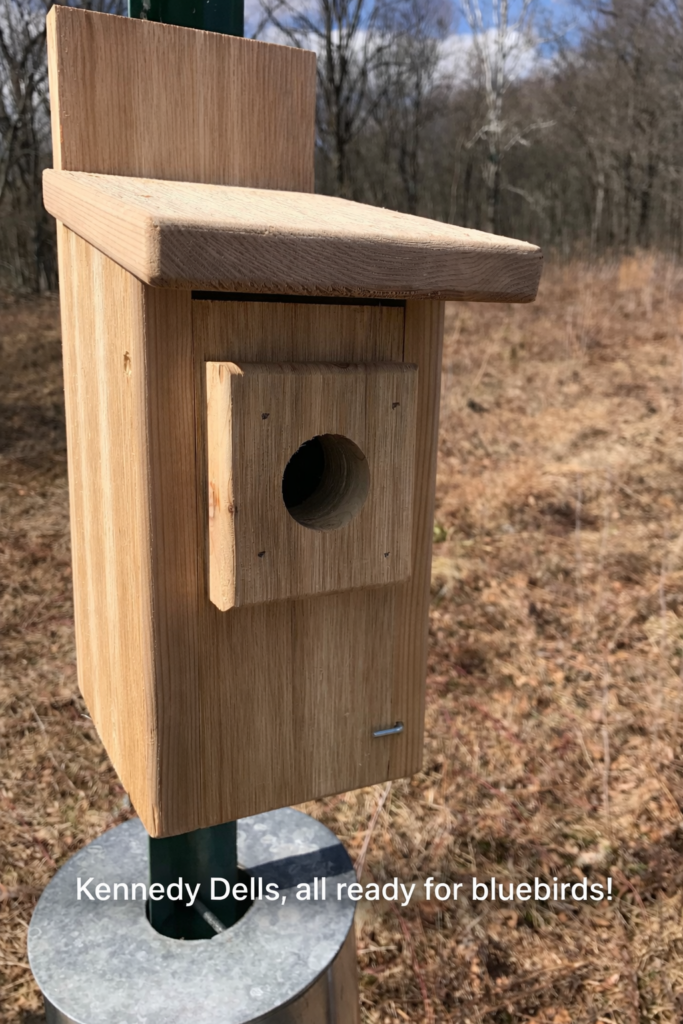
- Upgraded 12 bluebird nest boxes at Kennedy Dells Park in collaboration with county partners, replacing older boxes with new installations and coordinating seasonal monitoring.
- Continued promotion of native planting and backyard bird sanctuary practices to support local bird populations.
- Continued participation in the annual Christmas Bird Count, with dedicated volunteers contributing to long-term bird population monitoring and producing a comprehensive local report.
- Exploring opportunities for future habitat restoration and demonstration projects in local wetlands and parklands.
Education & Community Engagement
- Organized regular bird walks and monthly educational programs for members and the public.
- Coordinated special birding field trips for school groups in local parks, introducing students to bird conservation and outdoor learning.
- Led a Girl Scouts educational initiative to design “bird-friendly backyard” models; several participants are now developing this concept further as Silver Award projects (in progress).
- Coordinated a regional educational presentation in partnership with the Sierra Club, featuring a guest speaker on urban ecology and bird conservation, expanding outreach beyond the local chapter.
Public Outreach & Communications
- Expanded outreach through a series of published articles in the Rockland County Business Journal, covering topics such as the Cuomo Bridge lighting initiative, Sparkill Creek, and Piermont Marsh, helping connect local environmental issues with broader conservation themes.
- Continued to raise awareness of bird collisions, habitat loss, and light pollution through community programming and partnerships.
Looking Ahead
Rockland Audubon aims to build on this momentum by continuing to:
- Expand bird-friendly building and lighting practices
- Increase public engagement through educational programming and demonstration projects
- Support habitat restoration and conservation planning at the local level
Orange County Audubon Society
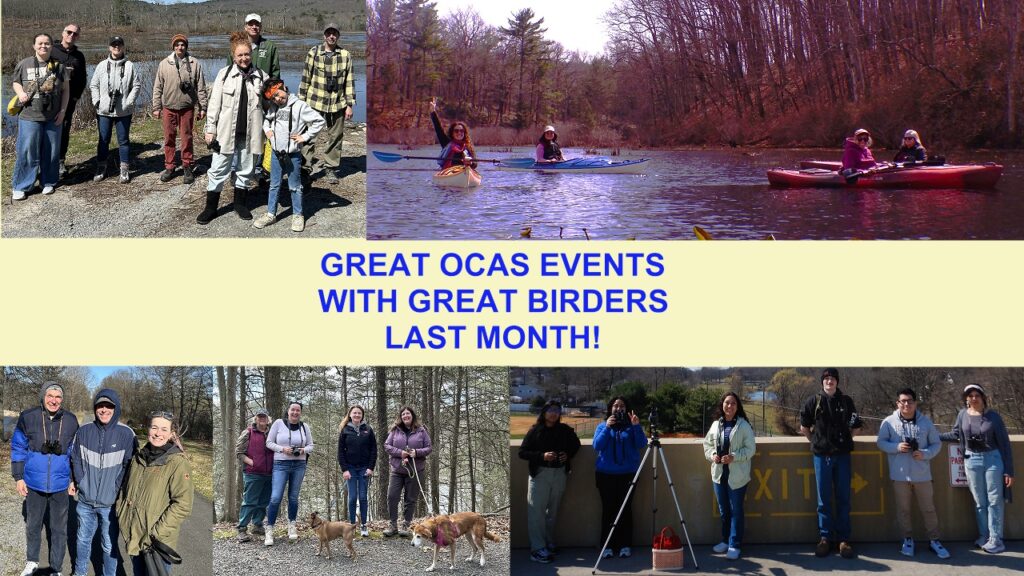
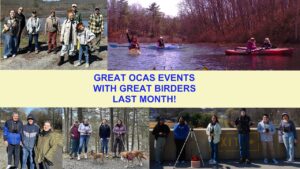
It has been an exciting year at the Orange County Audubon Society. In the past year, our chapter activities included:
1) field trips (an average of two a month) to all 5 of our OCAS sanctuaries in addition to other birding hotspots such as the Bashakill, Wallkill River Refuge, Shawangunk Grasslands, Bear Mountain, and Delaware River in Pike County, PA (newly completed trails at our sanctuaries allowed all 5 to be included for the first time and our expanded geographic range was intended to promote birding throughout a wider geographic area; these trips included outreach to diverse groups such as the NY Young birders and Dulce Esperanza summer program)
2) presentations (almost one a week as part of fall, spring, & summer series) which offered a comprehensive survey of bird groups, promoted the international aspects of bird conservation as was stressed in the summer National Audubon conference (in the fall series Local Birds and their travels); presentations included several centered on environmental topics (climate change, extinction, invasive species), assistance in trainings for local amphibian crossing and bald eagle monitoring efforts at the Bashakill, and presentations at local libraries
3) participation in Christmas Bird Count, Great Backyard Bird Count, & Climate Watch
4) formation of a new Audubon campus chapter at Orange County Community College
5) Invasive species control efforts
6) production of a monthly sanctuary updates which promotes local wildlife, environmental issues, and invites participation from all members
7) community outreach at events ranging from a Birding Game night to staffing a table at Warwick’s Apple Fest
NYC Bird Alliance
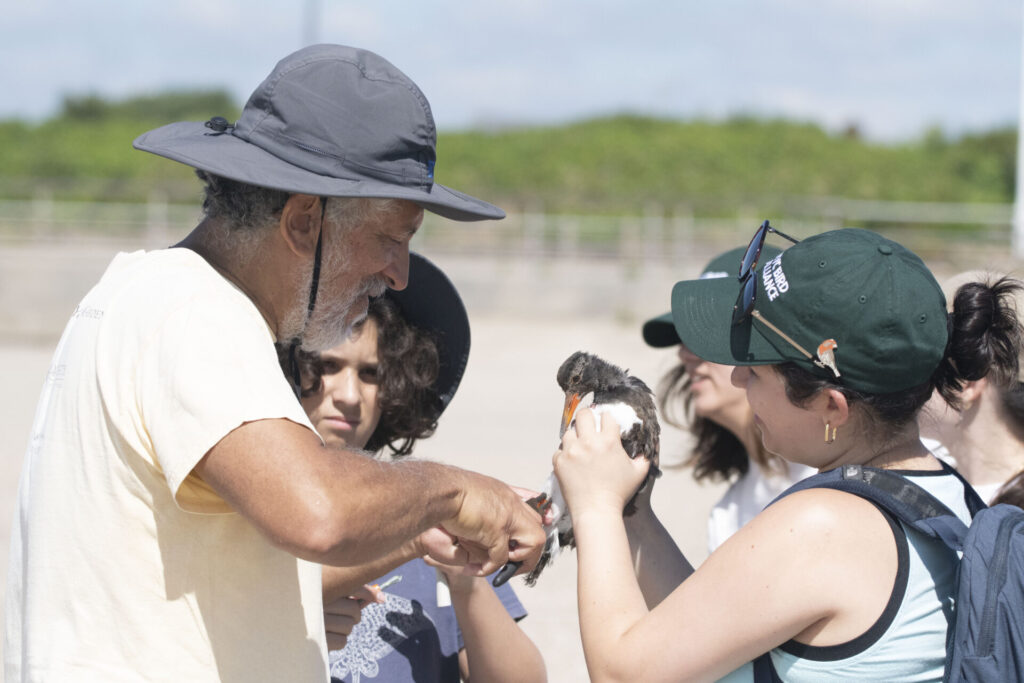
NYC Bird Alliance’s new strategic plan guides our work across five strategic goals for our organization. Recent highlights for those goals include:
Goal 1: Reducing Bird Collisions with Buildings
- City-wide collision monitoring to identify collision hotspots and measure success of retrofits, with 200 community science volunteers (record participation)
- Publishing our collision monitoring framework for use by other chapters
- New research on drone light shows at NY Botanical Garden will inform guidelines to mitigate threats to birds
- Grassroots advocacy campaign encouraging New Yorkers to take a Lights Out pledge
- Advocating for city and state Lights Out legislation, and for new bird-friendly design tax incentive
Goal 2: Protecting and Enhancing Habitat for Birds & Biodiversity
- Research on biodiversity in green roofs and small urban green spaces (incl. Google sites) demonstrates the conservation value of small urban green spaces
- Advancing a first-of-its-kind Biodiversity District initiative, coordinating property owners and public space managers to take neighborhood-scale biodiversity action
- Advocacy to incorporate native plants into street median design
Goal 3: Safeguarding the Waterbirds of New York Harbor
- Horseshoe Protection Act passed with strong grassroots support (more than 1,000 of our followers wrote emails)
- Publishing our scientific paper showing dramatic declines in Black-crowned Night Heron – fueling our DEC advocacy to protect the bird
- Protecting shorebird habitat in the Rockaways, Queens and expanding community engagement
- Deploying acoustic monitors on NY Harbor islands to track waterbird colony establishment and disturbance
Goal 4: Mobilizing Conservation Communities Citywide
- Hosted ~300 guided bird outings and 4 online lectures in 2025, engaging nearly 10,000 people
- Scaling our “NYCHA in Nature” program across ten public housing campuses across the city
- Enhanced accessibility with a series of bird outings focused on physical accessibility, multi-lingual bird outings, and Spanish translations of our birding materials
Goal 5: Sustaining Our Future
- Adding two new staff roles in 2026
- Strengthening board governance and committee structure
- Continued growth in fundraising, membership, and visibility, two years after organization’s name change
- Renewed office lease and renovating to accommodate our growing staff
Northern Catskills Audubon Society
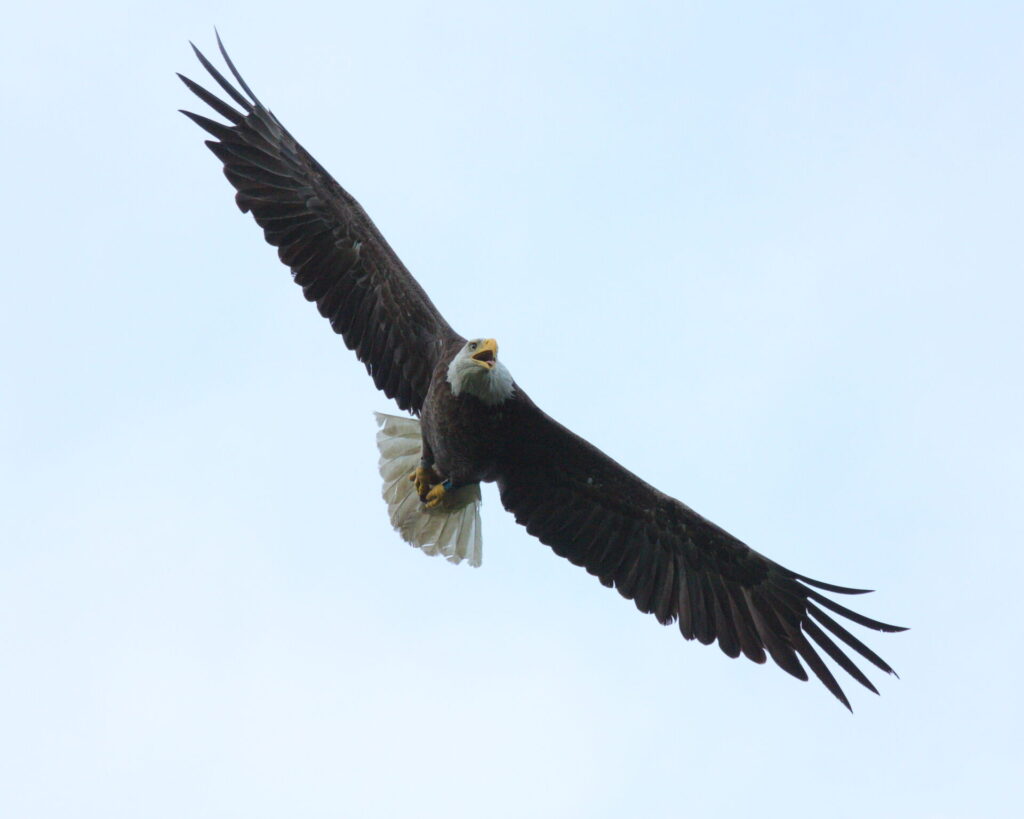
NCAS continues to struggle to increase participation, but we continue to be a presence in our area and advocate for birds and their habitats. We are the compilers for our area CBC, participate in GBBC events, lead bird walks at RamsHorn-Livingston Sanctuary and other sites – mainly in the Spring and Summer (that’s one of the reasons we’re not at the Council Meeting), and leverage our approx 400 members when lobbying and reaching out to legislators and other decision makers.
I hope y’all have a wonderful weekend – gleaning much from your peers, and hopefully you’ll see some good birds.
North Fork Audubon Society
Segment 1: Mission-Related (Programmatic Activities)
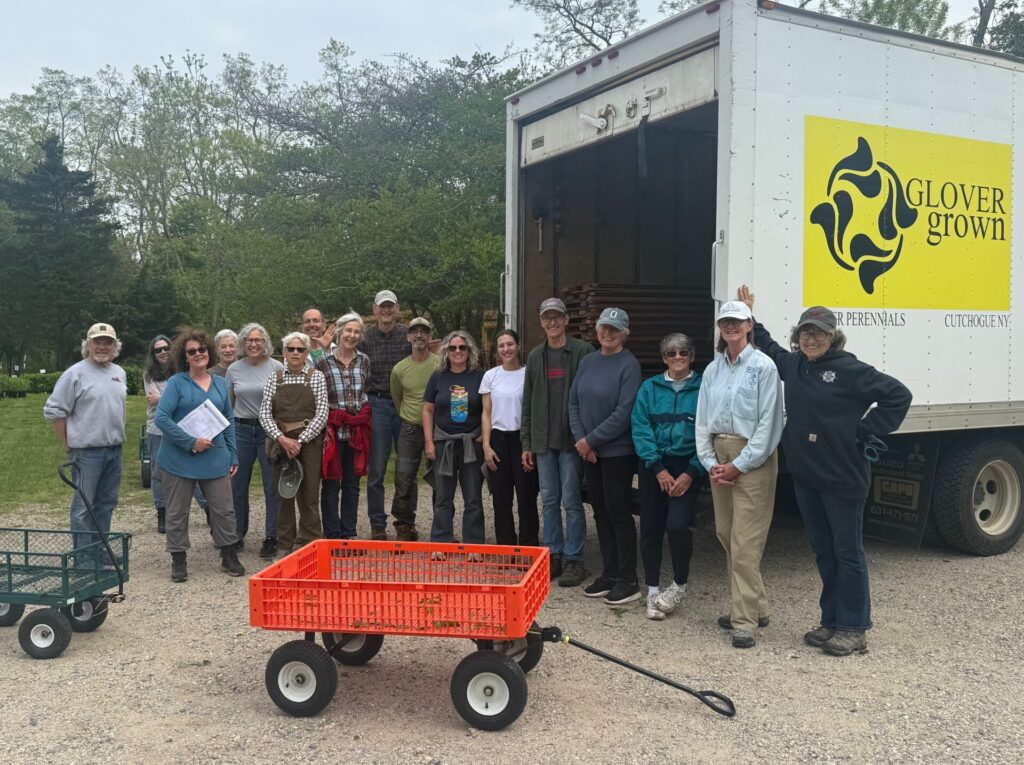
North Fork Audubon continues to advance its mission through a wide range of conservation, education, and outreach initiatives. The chapter remains an active steward of Inlet Pond County Park, organizing volunteer efforts focused on invasive plant removal, habitat restoration, our Berries for Birds garden initiative and beach cleanups. Shorebird outreach and Bluebird nest box trail monitoring continue, along with the expansion of our North Fork network of Purple Martin colonies.
Educational programming is year round. From November through March, the chapter offers at least two bird walks and one Zoom presentation each month. During the remainder of the year, a minimum of three bird walks are held monthly, including our Beginner Bird Walks, with an expanded schedule in May to celebrate spring migration.
The chapter has begun a sistership agreement with Aves Honduras, supporting international conservation collaboration. Additionally, the Bird Song Project, now in its third year, has grown into a signature event that brings together nature, music, and the arts to engage new audiences. This year we are collaborating with the East End Arts Council to create a Sculpture Trail at Inlet Pond County Park.
Segment 2: Chapter Resources (Fundraising and Support)
North Fork Audubon sustains its programming through consistent fundraising efforts and strong community support. The chapter’s spring and fall native plant sales, now running for over ten years, remain a key source of revenue while also promoting the use of native species in local landscapes.
Volunteerism continues to be a critical resource, supporting stewardship activities, events, and outreach programs. Community partnerships and collaborations with local organizations further strengthen the chapter’s capacity to deliver impactful programming and expand its reach.
The chapter is also exploring opportunities to expand its membership base to include business/corporate memberships.
Segment 3: Governance (Board Development and Sustainability)
The chapter maintains a stable and engaged board, supported by active member participation and a dedicated volunteer base. A Nominating Committee plays an active role in identifying and
engaging community members who are interested in joining the board or serving on committees, helping to build leadership capacity and ensure a pipeline of future board members. The Governance Committee’s recent focus has been to ensure that the Board follows NYS legal code for non-profits when voting for urgent measures that come up outside regularly scheduled meetings. The Governance Committee oversees the Annual General Meeting, which now features special events highlighting our chapter’s initiatives and encouraging member engagement.
Ongoing efforts of the Nominating Committee focus on sustaining leadership continuity, encouraging new member involvement, and supporting future board development.
Communication with members remains strong through regular updates, programming, and events, helping to maintain engagement and organizational continuity.
Menunkatuck Audubon Society
2025 Annual Report
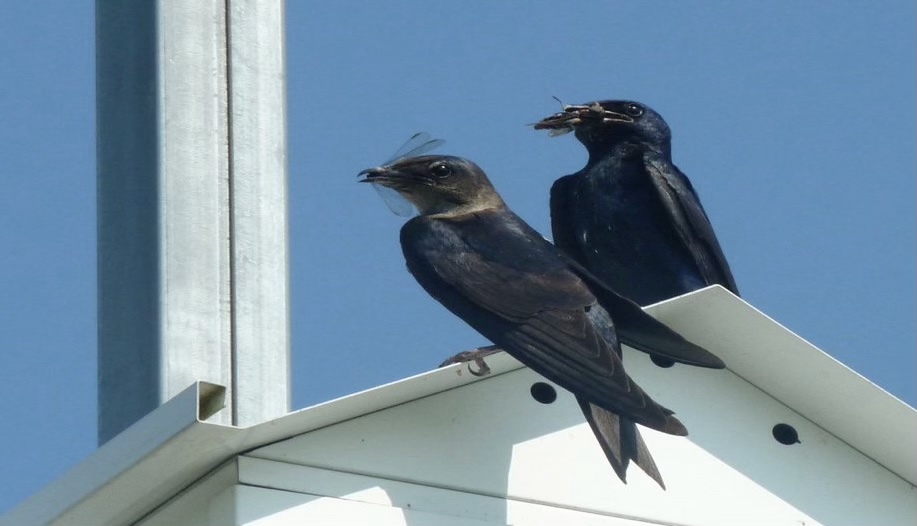
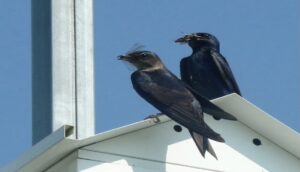
2025 draws to a close, we look back on a year where our shared commitment to protecting Connecticut’s vital ecosystems—and your dedication—made an extraordinary difference. Because of your support, Menunkatuck is connecting habitats, empowering communities, and ensuring a safer future for migratory birds across the hemisphere.
Restoring Habitat, Building Community
Our conservation work flourished this year, creating thriving pockets of natural resilience:
- Growing Green Futures: Our UrbanScapes Native Plant Nursery—a powerful partnership in New Haven—grew 4,000 native perennials and shrubs with the help of local teens. More than 3,000 of these essential plants now provide crucial food and nesting material, turning neighborhood gardens into vibrant homes for pollinators, bees, and butterflies.
- Nesting Success: Thanks to the dedication of our volunteers, our colonies had a banner year! The Purple Martin colony at Guilford Salt Meadow Sanctuary alone saw over 450 young fledge, while our efforts supported hundreds of thriving Ospreys and Tree Swallows along the coast. Every chick that leaves the nest is a testament to the safe spaces we create together.
- The Global Picture: Our Menunkatuck Motus Station at the Sound School detected eleven radio-tagged birds, including Short-billed Dowitchers and Ovenbirds migrating from as far as Jamaica. We are literally connecting the dots of the Western Hemisphere. We connected with Audubon partners at the Audubon Conference in Montreal. With your help, we donated 18 Motus nanotags to our partners in Costa Rica to strengthen this vital research link.
The Ongoing Fight for Protection
While we celebrate these successes, the threats facing our wildlife are persistent, and we must remain vigilant:
- Our Lights Out Connecticut initiative continued the fight to protect night-migrating birds, securing grants to install window collision mitigation on five buildings in New Haven. However, we still need to close loopholes in state lighting legislation and expand our community workshops to keep more birds safe.
- We continue to tirelessly advocate against second-generation rodenticides, which harm owls, hawks, and mammals—a legislative battle we will wage until our state adopts adequate protections.
Education
- We offered 17 community programs on Zoom, with an average audience of about 40 people, including speakers and attendees from throughout the Americas.
- Our streaming video from our nest cameras in Clinton, at Hammonasset Beach State Park, and on Falkner Island continued.
Litchfield Hills Audubon Society
- We have finally gotten a young person to join our board. He’s only 28 and is one of our former scholarship recipients. He’s now the director of aviculture at Ripley Waterfowl Conservancy. He has also just become the chair of our Scholarship Committee.
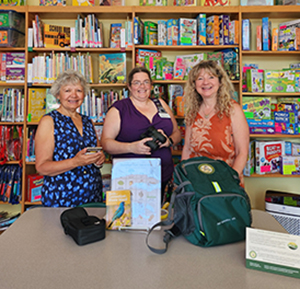
- We created two more birding backpacks, one with information in Spanish, which we donated to the KidsPlay Children’s Museum in Torrington, CT. We now have a total of 10 backpacks at libraries and the museum.
- This year we will convert part of a lawn at our Kalmia Sanctuary into wildlife habitat, using the services of a landscape architect who co-owns a native plant nursery. The 2-acre lawn, plus a house and garage, was bequeathed to us by a former member in 1992. It’s adjacent to our 10-acre forested sanctuary. The house was more than 100 years old, which required a lot of maintenance. We’ve also had issues with tenants. Since it’s taken a lot of time and money that would be better spent on our mission, our board decided to have the house demolished. We will convert as much of the lawn as possible into wildlife habitat.
- We’re also creating Wood Duck nest boxes for our Wigwam Brook Sanctuary.
Genesee Valley Audubon Society
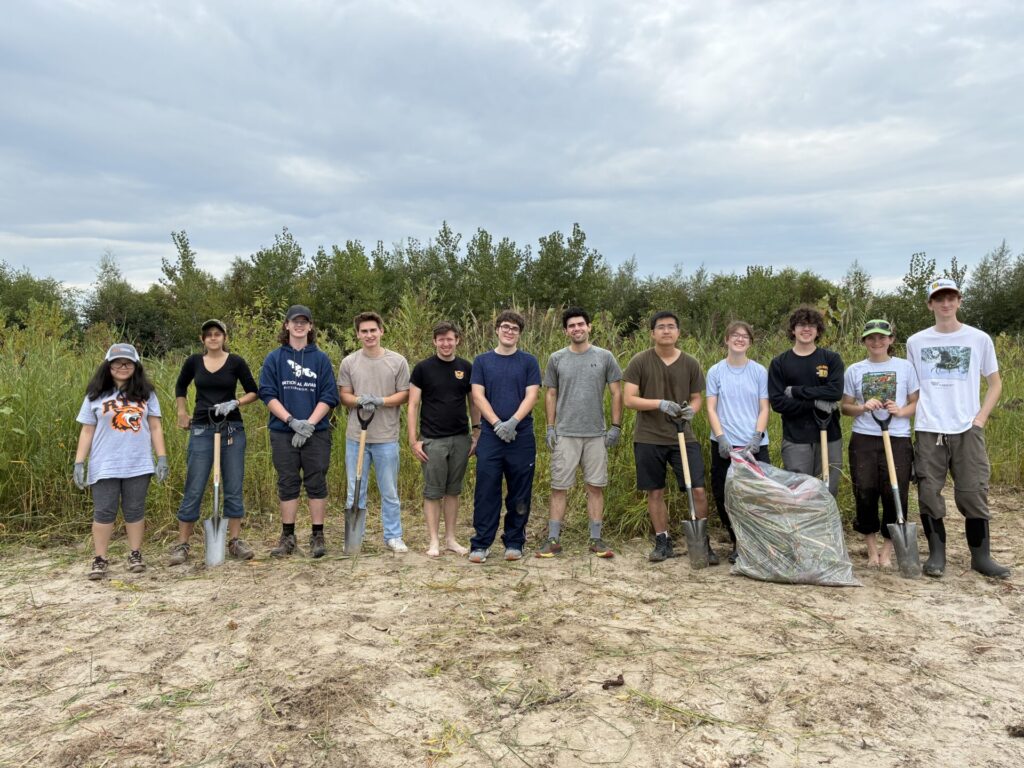
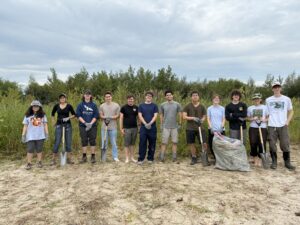
In Sept. 2025 we invited the Rochester Institute of Technology (RIT) Campus Chapter to join GVAS for two events the Coastal CleanUp and a weed pull on the barrier beach. Both events took place at Braddock Bay Wildlife Management Area. The Campus Chapter members that turned out for the Beach CleanUp added so much to our efforts to picking up trash that was often hidden in the bushes.
The following weeked the RIT Campus Chapter showed up to remove weeds from the barrier beach at the mouth of Braddock Bay to restore it to a beach habitat for shorebirds. This project was part of an Audubon in Action Grant. THe Campus Chapter members worked hard for three hours removing sand bar willow and other weeds that had long roots. While they worked they played twenty questions about birds. GVAS fed them lunch when they finished. The students had a good time with each other and went back out to watch the shorebirds when they finished lunch.
Eastern Long Island Audubon Society
We have helped establish a new Eastern Blue Bird Trail at the Quogue Wildlife Refuge. Because of the massive impact of the invasion of the Southern Pine Beetle, almost all the tall pitch pine trees at the Refuge have died. For safety reasons – and to help protect the remaining healthy trees – a large portion of the Preserve has been clear-cut. To promote what seems to be an idea Blue Bird Habitat, a trail and the boxes have been introduced since the beginning of 2026.
Our Board of Directors has expanded over the past two years. These new members have really helped the long-time members in helping the Chapter run smoothly. From Darlene (Birding Backpacks), Terry (Program Chair), Janis (Recording Secretary), Doug (Camp Scholarships), Brian (Field Trips and the projected stewardship of the Montauk Point MOTUS Station), and Darlene – the other one! (Field Trips) – an enthusiastic group looks toward the Future.
Our newsletter, The Osprey, continues to be GREAT! Although we have had to cut back to three/four issues per year, we still print paper and mail to all our Chapter members. Color, photos, information – we have received many positive comments from our membership.
Our Chapter’s usual meeting place is temporarily closed due to renovation and expansion of the Nature Center – a new location, for the time being, has been found, with some Members Meetings taking place out-of-doors in upcoming months.
Delaware-Otsego Audubon Society
Our chapter operates in the Cooperstown-Oneonta region in Central NY. Established in 1968, we are in the early planning stages for our 60th anniversary coming up in 2028.
We held our second iteration of the 15-hour HELP (Habitats & Ecosystems for Land Pros) Program this past March with our own instruction team at the Albany Pine Bush Center with a small group of area landscape professionals and the full groundskeeping and facility maintenance staff from a small upstate colllege. We have plans in the works to host another program this coming fall during the first week in November. We also plan on hosting the shorter 3-hour version of this program (HEAL – Healthy Ecosystems for Any Landowner) after its planned release later in 2026.
Our chapter continues to provide free Acopian Bird-Savers and FeatherFriendly decals using materials from our 2025 programming (we have about 1300 feet of paracord remaining out of 7000 feet purchased). These continue to be well-received by our h omeowner participants. We attended the National Audubon Leadership Conference in Montreal this past summer and connected with many chapter leaders throughout the U.S. and beyond to share information about our collaborative chapter effort to reduce window collisions. We continue to stay connected with many of our contacts in the National chapter network about these programs, offering guidance and support on implementation of workshops.
The Franklin Mountain Hawkwatch is celebrating 38 years of raptor data collection and continues to be a fall destination for birders throughout NY, CT, MA, NH, PA and VT. We are challenged with an aging counter volunteer base and are looking at building a fund that can hire a seasonal paid counter during the fall months starting in 2026 through new planned giving mechanisms, RMD’s, large gifts and ongoing annual appeals. This is a new direction for our chapter as we have operated with all-volunteer counters and spotters throughout the history of our hawkwatch program.
We are in the beginning stages of our International Partner Matching pilot project for grassland bird conservation and are in the process of establishing partnerships near and far and are pursuing grants to secure needed funding for this work in 2026-2027 and beyond.
Chemung Valley Audubon Society
Chemung Valley Audubon Society has bird walks on Saturday morning averaging 18 people in attendance; monthly meeting with speakers on varied topics (this past month was report from Cornell grad student on her study of bobcats using traps in central NY regions); bird counts through the year (Christmas Bird Counts in Corning and Elmira, Waterfowl-Eagle Count, feeder watch, etc.); conducted the citizen science Climate Watch by making counts twice a year for NAS; establishing pollinator meadow on our sanctuary with educational signage for the public; the local Elmira College professor has used our sanctuaries for their outdoor laboratories for her science classes and even invited our members to attend the student presentations in class; tabling events throughout the year at farmers markets in Elmira and Corning, wellness fairs at high schools and local colleges, winter sportsman show, Juneteenth, Pride Day, and River Fest with Chemung River Friends; maintain pollinator garden with educational signage and Ek birding trail on Mark Twain State Park; listed our sanctuaries on NYS DEC birding website; and members gave presentations to our local organizations including Chemung River Friends and at local county library on bird migration.
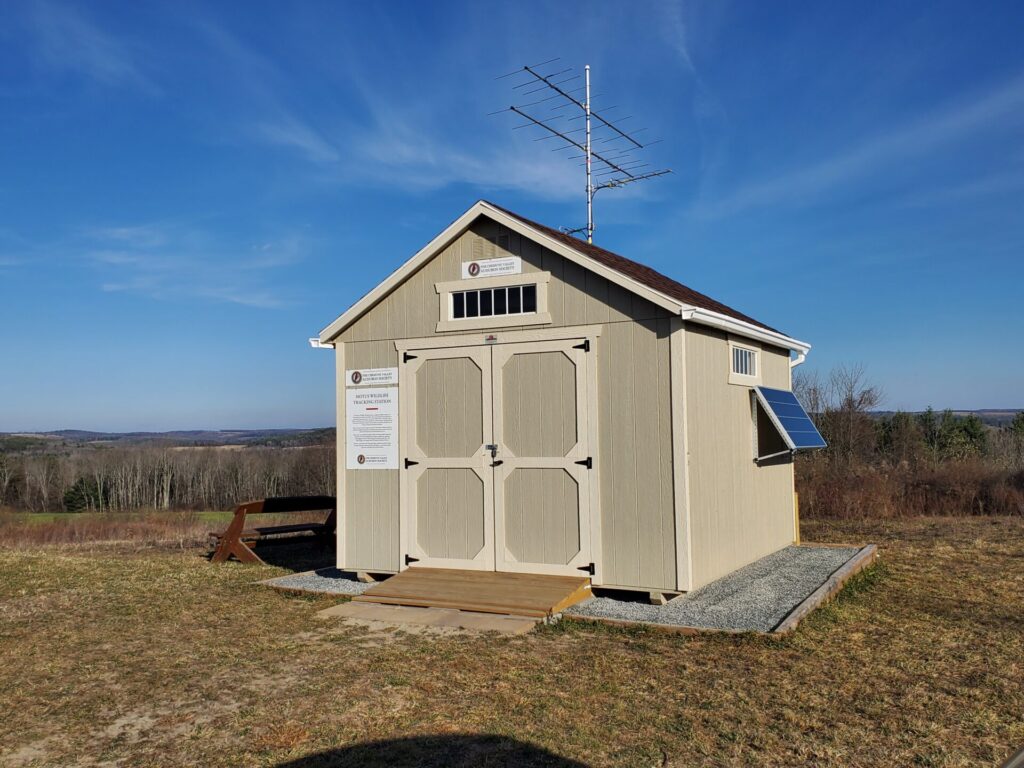
One activity to highlight is our new Motus station that we installed on our sanctuary in September 2024. With funds from member donations, Sloane-Dugan Foundation and grant from National Audubon Society, our chapter installed the Motus station at our Northrup Hill Audubon Sanctuary located in Steuben County at 1700-foot elevation. To date, we have not had a ‘ping’ at our station, but maybe we’ll get lucky during this year’s spring migration.
Bronx River-Sound Shore Audubon
Accessibility work: We held our first speaker program for residents in wheelchairs at Kings Harbor Multicare rehab center in the Bronx last May. Currently, a board member with MS is launching an initiative called Boundless Skies to share the joy of birding and astronomy with the MS community, and some of us will be participating in an event at the Westchester MS Walk on May 3 where he’ll be demonstrating parallelogram-mounted binoculars and scope and monopod-supported binoculars. We’ll also be working with another local rehab facility and schoolchildren, and he is writing a column on birding with mobility issues for our newsletter.
Conservation and education: Our Eastern Bluebird Project, led by Sandy Morrissey, with hundreds of boxes installed over many years, continues to add new locations, involving hundreds of people from children to seniors in volunteering. Our school program, also led by Sandy, provided school classes with a 5-visit bird curriculum, including Greenburgh Nature Center bringing in birds they can pet. We now regularly announce our offer of scholarships to assist with tuition for nature camp for children or adults, now extended to avian research projects, and continue offer grants to establish and maintain native plant gardens. We’re just starting to work on offering libraries and other buildings materials to make windows bird safe.
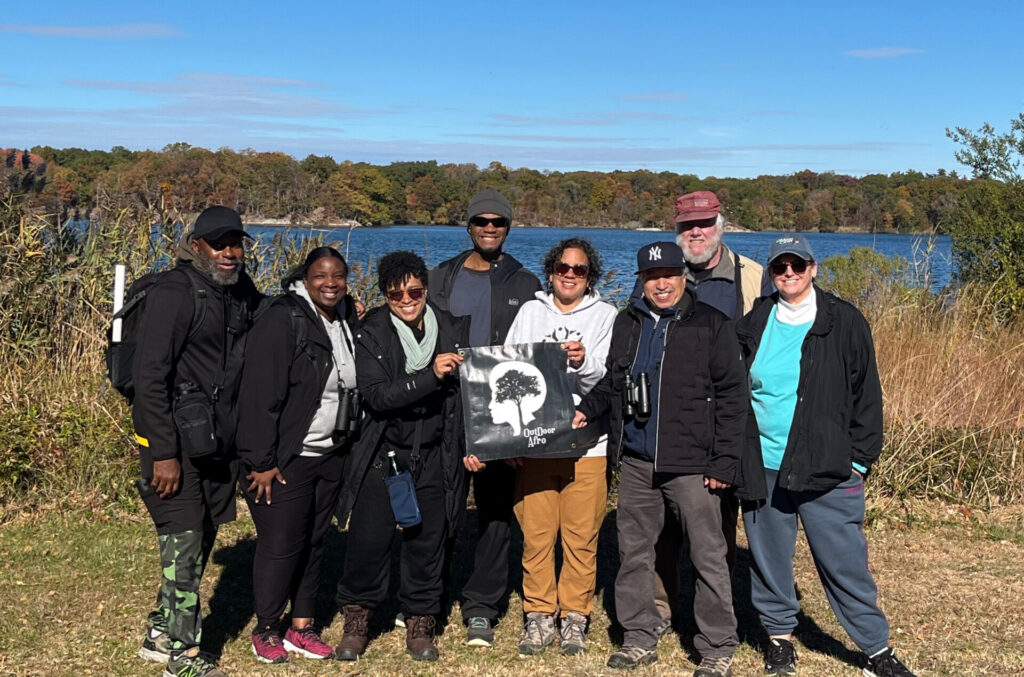
Field trips: Our field trips are thriving thanks to Doug Bloom, and we recently reinstated youth walks, gaining a few new participants with some additional outreach. We purchased walking sticks to lend and car signs to identify our chapter and added a new online signup option (as well as a new payment option for seed sales and a shared drive for our documents). We also held our first walk for the Westchester chapter of Outdoor Afro, a nonprofit that connects the Black community with nature activities.
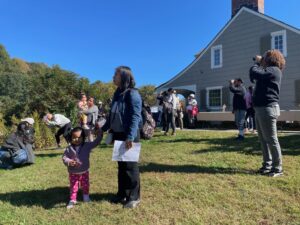
Events: We held our second Mount Vernon Bird Day festival to reach an underserved area, with activity tables, birds from the nature center, short walks, and a discount membership offer. This June’s event will feature a new binocular giveaway where people can enter a free drawing to win binoculars, with the goal of helping more kids have access to them. Our annual meeting will now include a gear swap.
Engagement: We had a fantastic lineup of monthly Zoom speakers from September through May on diverse topics from the splitting of species to the reintroduction of bald eagles. Our “Bird Photo of the Week” contest is popular, and our newsletter receives wider distribution. We also had the most successful seed sales in the chapter’s history, with a record amount of added donations.
Challenges: We were challenged to find new locations for our seed sale pickup and annual meeting, with our usual locations being renovated, but the places we found created a new partnership and strengthened an existing one. The new roster system was also a challenge, but we are ultimately thrilled to welcome the new supporters.
Bedford Audubon Society
Program Update – With a new Executive Director on staff since January of this year we have continued to refine the focus our work to address how Bedford Audubon can maximize conservation of priority species of conservation concern, along with their habitat, locally and internationally, while engaging more people across our territory in that conservation.
To that end, in 2025 our Habitat Management Task Force finished a plan for restoration of scrubland habitat at our Hunt-Parker Sanctuary to increase nesting grounds for Brown Thrasher, American Woodcock, and Prairie Warbler as well as other scrubland species. These efforts have been recognized by NYS DEC with the awarding of a $40,000 multi-year grant to roll out that restoration. Now the Habitat Management Task Force is looking to engage an Audubon NY/CT recommended forester to update our Sanctuaries’ forest management plan so we can roll that out in 2027.
Meanwhile the Garden Committee is continuing to develop our Native Garden Accessibility Trail expanding access to nature to those with mobility issues. We are also partnering with horticultural organizations to use a portion of our property for native plant propagation, native garden workshops, and other programs to expand bird friendly gardening and property management.
During the first months of 2026 we have had a robust slate of workshops, lectures, walks, and field trips from Bird Collision workshops, regular bi-lingual family bird walks, events with international partners to bring their conservation work to a local audience all the way to sponsoring international birding trips to see the work.
Fund Raising – We are in the midst of our Bird-A-Thon which will occur on the weekend of May 15 through the 17th. Last year eight teams helped us raise $46,700 while identifying 173 species, funding our summer field work. This work guided the finalization of our scrubland habitat management plan. This year we already have eleven teams, and our goal is to raise $50,000 to fund our scrubland restoration work.
Governance – As mentioned earlier, we hired an Executive Director, Medha Pandey, PhD, who started with us in January of this year. This brings our staff to two full time members (Medha and our naturalist, Tait Johansson) as well as a part-time Development Officer (Anya Young), and part-time Office Administrator (Susan Sloan). We added two members to our Board last year (an Audubon veteran, John Askildsen and a relative new-comer Debbie Burke) and will be adding two more in May (Mike Usai who serves as Deputy Chief of the Natural Resources Division for the NYC DEP and Mike Newhouse who is a Lead Ecologist and Project Manager at WSP USA Inc.). These new members bring a wealth of habitat and species conservation knowledge as well as policy understanding and are already serving on our Habitat Management Task Force. With their addition our Board will number 12 people.
Audubon Community Nature Center
Audubon Community Nature Center in Jamestown, NY, hired a new Executive Director, Aaron Sidder, who started in October 2025 and also serves as the new Chapter Leader. Much of the past year was spent navigating the transition in leadership. Six months in and the community is really starting to coalesce.
The past year has seen a number of capital improvements to the building and grounds, with more in store for the coming months. We’ve addressed upgrades to our animal care spaces, renovations to one of our outdoor pavilions, and the installation of new benches along the trails. We remodeled our front reception desk in January to offer a more welcome and accessible space for visitors. A lighting overhaul in February has paid immediate dividends in energy efficiency, and we made critical improvements to our well and septic system in the fall. As the weather allows in the coming weeks, we will embark on a much-needed repaving of our parking lot, which, due to its frequent flooding, is currently closer to serving as aquatic habitat than offering visitor parking. All told, these improvements are welcome upgrades for the more than 14,000 visitors who come to Nature Center and hike our trails.
Our organization continues to actively engage with the schools in Chautauqua and Warren (PA) Counties. In fiscal year 2024-2025, our staff delivered a total of 1,025 school and community programs that included in-person classroom and schoolyard visits, programs for libraries, and other local organizations, as well as fieldtrips to the Nature Center and surrounding trails. Our school programs are carefully curated to enhance classroom curriculum through the introduction of hands-on learning opportunities that feature both real and manufactured natural artifacts.
We are continually grateful to the dedicated and talented volunteers that help our organization to thrive. Last year, our auditors assessed the value of annual
volunteer service at approximately $214,341! Many of them were instrumental in helping us put on our annual Audubon Lights Festival, which wrapped up in early April.
And, of course, we continue to be thrilled and inspired by the wildlife on our preserve. We were graced by sandhill cranes this spring and are currently maneuvering around a fox den in our front yard that is home to four kits. The otters in our pond have been active as well, with several photographers capturing stunning images of the otters in Big Pond. All the while, we marvel at the avian presence at our feeders and along the trails. Based on eBird data for 2026, our local birders have identified 98 species at the preserve—with more accounted for every day. In the last day, we’ve recorded the year’s first observations of osprey and green herons.